






























Navigating Towards Safety: National Road Safety Week
National Road Safety Week is a crucial initiative aimed at reducing road accidents and fatalities by promoting responsible driving behaviour. This annual event emphasizes the importance of adhering to basic road signs and rules. By raising awareness, educating the public, and fostering a culture of responsible driving, the week seeks to minimize the loss of lives on the roads. Key aspects include understanding stop signs, obeying speed limits, respecting traffic signals, prioritizing pedestrian safety, and avoiding overtaking in restricted zones. Ultimately, National Road Safety Week encourages a lifelong commitment to safe driving practices for the well-being of all road users.

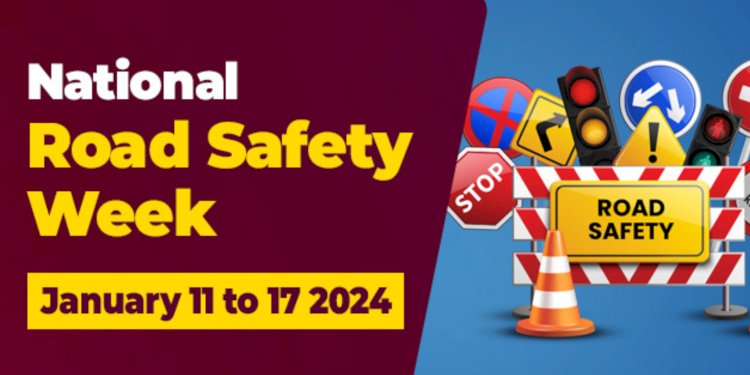
National Road Safety Week serves as a timely reminder of the critical importance of promoting safe practices on our roads. In a world where mobility is essential for personal and economic growth, the need for responsible road behaviour cannot be overstated. This dedicated week, observed annually, aims to create awareness, educate citizens, and foster a collective commitment to reducing road accidents and fatalities. Understanding and adhering to basic road signs and rules play a pivotal role in achieving this goal.
Importance of National Road Safety Week:
-
Reducing Accidents and Fatalities: National Road Safety Week is a concerted effort to curb the alarming rise in road accidents and fatalities. By raising awareness and emphasizing the significance of responsible road behaviour, the initiative strives to minimize the loss of lives on our highways.
-
Educating the Public: One of the primary objectives of this week is to educate the public about the importance of road safety. Through workshops, seminars, and awareness campaigns, individuals are informed about the potential dangers of reckless driving, the importance of seatbelt usage, and the hazards of distracted driving.
-
Promoting Responsible Behavior: National Road Safety Week encourages citizens to adopt responsible road behaviour. This includes following speed limits, avoiding the use of mobile phones while driving, and respecting traffic signals. Creating a culture of responsible driving is essential for the overall safety of road users.
Basic Road Signs and Rules:
-
Stop Sign: Recognized by its octagonal shape and red colour, the stop sign indicates that drivers must come to a complete stop before proceeding. Ignoring a stop sign can lead to collisions at intersections, making it crucial for drivers to obey this rule.
-
Speed Limit Signs: Various speed limit signs indicate the maximum permissible speed on a particular road. Drivers need to adhere to these limits to ensure their safety and the safety of others on the road.
-
Traffic Signal Lights: Red, yellow, and green lights control the flow of traffic at intersections. Drivers must stop at a red light, proceed with caution on a yellow light, and go when the light turns green. Ignoring these signals can result in accidents.
-
Pedestrian Crosswalks: Zebra crossings and designated pedestrian areas signify safe passages for pedestrians. Drivers must yield to pedestrians at these crossings, and pedestrians should use them to safely navigate busy streets.
-
No Overtaking Zone: A solid yellow line on the road signifies a no overtaking zone. Overtaking in these areas is dangerous and can lead to accidents, as visibility may be restricted.
Conclusion:
National Road Safety Week serves as an annual reminder to prioritize safety on our roads. By understanding and adhering to basic road signs and rules, individuals can contribute to the collective effort of creating a safer and more responsible driving culture. Through education, awareness, and sustained commitment, we can work towards reducing road accidents and ensuring the well-being of all road users. Let us embrace the principles of National Road Safety Week not just for one week but as a lifelong commitment to responsible and safe driving.